

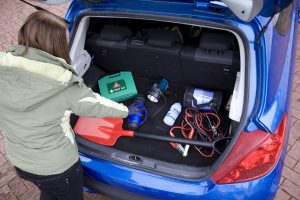
Having an emergency car care kit in your Kia is essential. Being stranded on the side of the road is a scary prospect, but it’s easier to deal with when you’re prepared for the worst-case scenario.
Essential Car Care Equipment
You should always keep a spare tire, working jack, pipe, and lug nut wrench or tire iron in your trunk or hatchback cargo area in the event that you need to change a tire. If you don’t know how to change a tire, keep a list of emergency numbers in your glove box, including a number for roadside assistance. AAA members should always keep their membership card in the glove compartment or center console.
Additional emergency equipment that will come in handy includes roadside flares, two quarts of oil, jumper cables, one gallon of antifreeze, extra fuses, brake fluid, a flashlight, screwdriver, adjustable wrench, a pair of pliers, a tire inflator, tire pressure gauge, vise grips, a roll of duct tape, an ice scraper, pocketknife, work gloves, a funnel, rags, and paper towels. Store these items in a large, durable canvas bag, tool box, or plastic storage box with a secure lid.
This list may seem excessive, but it’s a must if you frequently drive in inclement weather or are planning a road trip. For the daily commute, you can reduce your emergency car care kit to the basics. For instance, it’s a good idea to always have a flashlight, extra oil, roadside flares, and jumper cables on hand.
Personal Comfort and First Aid
In addition to a basic emergency car care kit, you should always keep a first aid kit on hand. You can purchase one that’s already been assembled or put it together yourself. A basic first aid kit should include Band-Aids, aspirin, backup medications (such as an extra asthma inhaler), antibiotic ointment packets, compress dressing, wipes, scissors, gauze pads, tweezers, and emergency numbers.
In addition to first aid, your emergency kit should include a blanket, jacket or coat, change of clothes, bottled water, and snacks. Granola and energy bars are perfect for storing in your emergency kit; just be sure to check the expiration dates often so you can replace items as needed.
Mental Preparation
Before you end up in an emergency situation, become familiar with the items you’ve packed. Most prepackaged first aid kits come with inserts on how to perform basic first aid, so study this information before an emergency arises. Along those same lines, there’s little point in storing items to change a tire if you’re not familiar with the process. If you’re not mechanically inclined, ask a knowledgeable friend to show you the basics.
Even if you intend to rely on emergency numbers and a good towing company to get you out of a bind, it’s important to reduce your chance of injury by pulling off the road safely. You shouldn’t try to change a tire on the side of a high-speed freeway, for example, so sometimes your best bet is to just sit and wait.
You can’t always prevent a tire blowout or other accident, but having an emergency car kit on hand will make the experience much less stressful.
This photo, “HA1-000523” by Highways England used under CC BY 2.o. “HA1-000523” is licensed under CC BY 2.0 by Gay Family Kia.
 Warranties include 10-year/100,000-mile powertrain and 5-year/60,000-mile basic. All warranties and roadside assistance are limited. See retailer for warranty details.